Why Does Honey Granulate?

The Real Science Behind "Set" Honey
If you keep bees long enough, a customer will eventually call you convinced your honey has gone bad. It's turned cloudy. Gritty. Solid.
It hasn't gone off. Granulation is actually a sign of pure, unpasteurised honey — and if you understand the science, you can explain it with confidence and even control it to your advantage. If you'd like to listen to the full story, head over to my Patreon Podcast
Here's the breakdown.

Why Honey Crystallises in the First Place
Honey is roughly 80% sugar and less than 18% water. By normal chemistry rules, that water shouldn't be able to hold that much sugar dissolved. That's what makes honey a supersaturated solution — it's unstable from the moment you extract it.
The two sugars doing most of the work:
Fructose — highly soluble, wants to stay liquid
Glucose — low solubility, constantly trying to crystallise out
The answer to "why does my honey set?" comes down to the Glucose-to-Water (G/W) ratio. Once that hits 2.1 or higher, crystallisation becomes almost unavoidable.
It Depends on What Your Bees Were Foraging
Your local forage dictates everything that happens inside the jar.
Sets fast and hard:
Oilseed Rape (Brassica napus)
Dandelion
Ivy — often sets into a grey, cement-like texture almost overnight
Stays liquid for months or years:
Sweet Chestnut
Borage

The Physics — Nucleation and the 14°C Sweet Spot
Crystallisation needs a starting point, called a nucleation point. In honey, this is almost always triggered by natural impurities — pollen grains, tiny wax fragments, dust, air bubbles. These act as anchors that glucose molecules latch onto.
This is exactly why heavily filtered supermarket honey never sets. Filtering strips out the pollen and wax, so there's nothing for the glucose to grab onto.
The answer to "what temperature makes honey crystallise fastest?" is 14°C (57°F).
Above 25°C: water holds glucose too easily, no crystallisation
Below 5°C: everything's too thick to move
At 14°C: the perfect balance — insoluble enough to push crystallisation, warm enough for molecules to still move and build structure
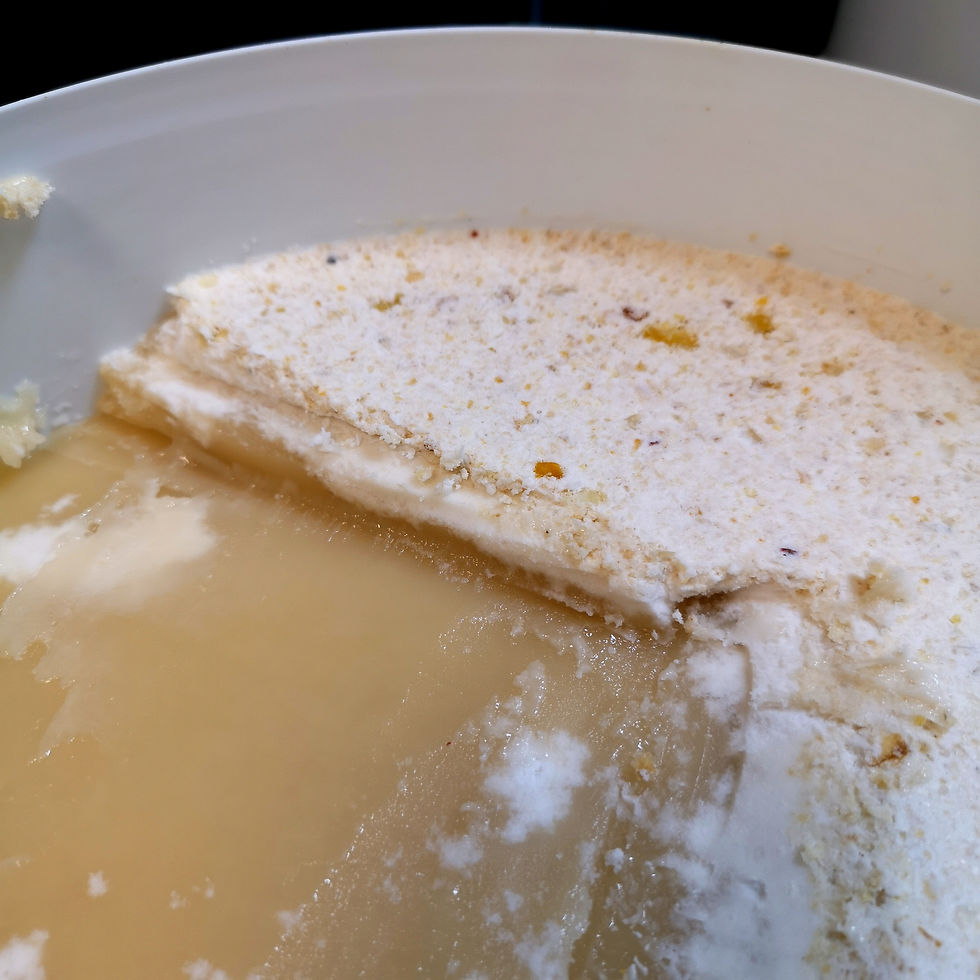
Taking Control — The Dyce Method
Instead of letting honey crystallise randomly into a gritty brick, beekeepers can engineer a smooth, soft-set texture using the Dyce Method, developed in the 1930s by Professor Elton J. Dyce at Cornell University.
Here's how it works:
Start with completely liquid honey (warm gently if it's begun to cloud)
Stir in a "seed" — a small batch of already smooth, soft-set honey — at a ratio of 1 part seed to 9 parts liquid honey
Jar it up and store at 14°C for around two weeks
The result: millions of microscopic crystal seeds compete for the same glucose, so none of them grow large or gritty. You end up with a velvety, stable, soft-set honey that never turns into a brick.

Wrapping Up
Next time someone asks why their honey has gone solid, you don't have to say "it's just natural." You can tell them exactly why — supersaturation, nucleation, and a precise thermodynamic sweet spot at work in their jar.
It's not defective honey. It's physics, sitting right there on your shelf.
Want the full story, including the parts I couldn't fit into this post? Subscribe to Beekeeping Short and Sweet on youtube.com/@TheNorfolkHoneyCo, and drop a comment below — I'd love to hear whether your honey sets hard or stays liquid, and what you're working with this season.
And if you want more help like this through the whole beekeeping year, come join the Patreon mentoring community at patreon.com/norfolkhoney.


Comments